
 Iron & Steel
 Power
Power
 Plywood & Lamination
 Sugar
Sugar
 Tea
Tea
 Oil & Gas
 Solar & Wind
 Agriculture
 Chemical
 Food Product
 Real Estate &
Construction
Real Estate &
Construction
 Logistics
 Automobile

.jpg)



Cyber Insurance in India: Trends, Risks & Market Outlook
India’s rapid digital transformation—fueled by widespread internet access, growing fintech activity, and government-led initiatives such as Digital India—has widened the nation’s cyber threat surface. As industries adopt digital tools and services, vulnerabilities also multiply, making them lucrative targets for cybercriminals.
Cyberattacks like phishing, ransomware, data breaches, and DDoS incidents now frequently impact critical sectors such as BFSI, healthcare, retail, and even small businesses. Amid this escalating risk environment, cyber insurance has emerged as a strategic safeguard that helps organizations manage financial losses resulting from such events.
This article explores the relevance, structure, types, and evolving role of cyber insurance in India, while offering insight into how it contributes to building national cyber resilience and risk preparedness.
What is Cyber Security Insurance?
What does cyber security insurance mean?
Cyber security insurance, also known as cyber liability insurance, is a specialized policy that protects individuals and organizations from the financial impact of cyber incidents. It covers a range of losses stemming from events such as data breaches, ransomware attacks, system failures, and cyber extortion.
What does it typically cover?
Coverage often includes investigation of breaches, forensic audits, data restoration, legal expenses, regulatory fines, customer notification, credit monitoring, and even crisis communication and public relations efforts. Some policies extend to third-party liabilities and business interruption losses.
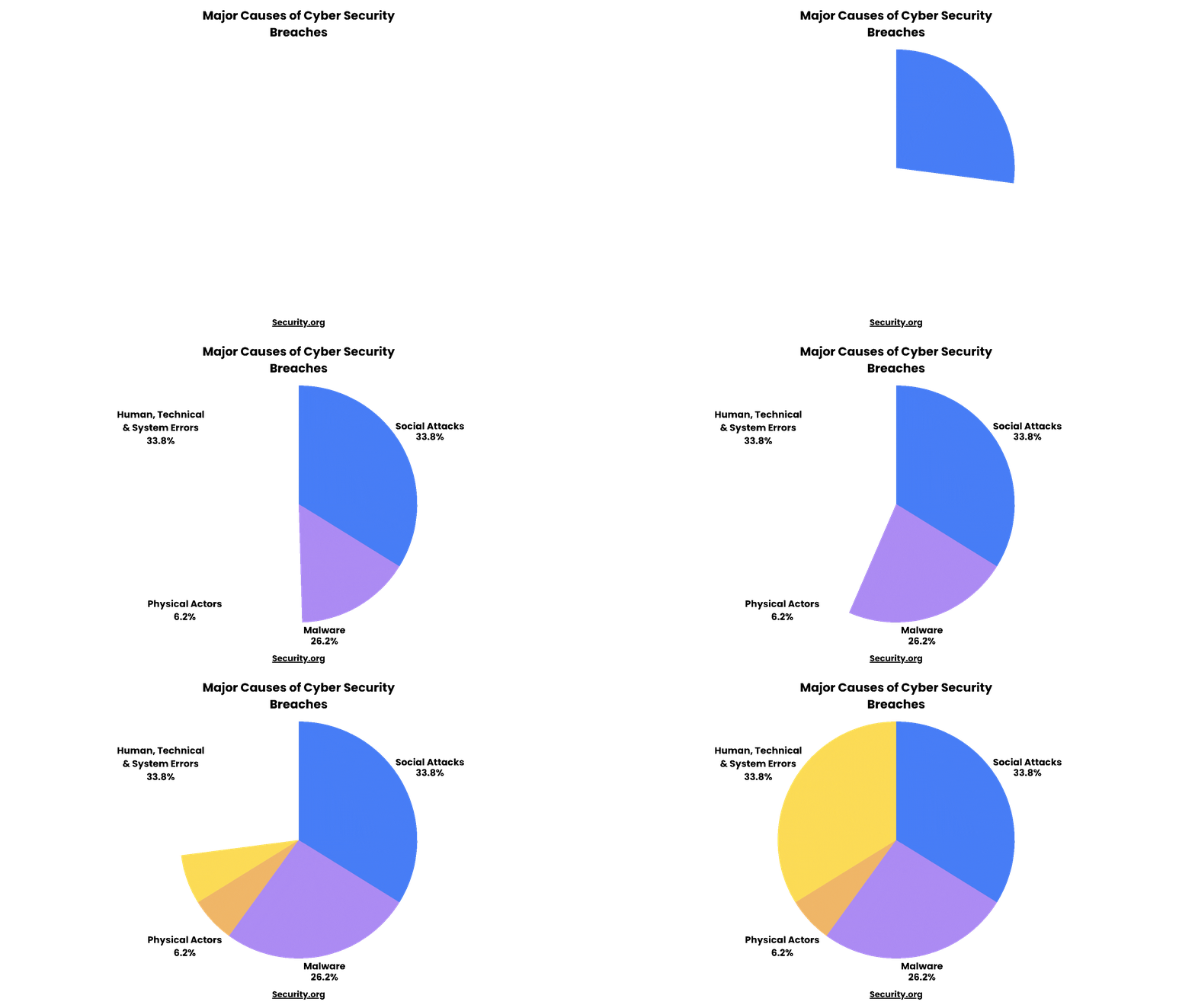
Major Causes of Cybersecurity Breaches
As cyber threats evolve, understanding the root causes of security breaches becomes essential for designing effective risk mitigation strategies and cyber insurance coverage. Businesses—both large and small—face increasing exposure to a variety of attack vectors that exploit human error, technological vulnerabilities, and insufficient security practices.
According to Security.org, a study of reported cyber incidents reveals that the majority of breaches stem from a combination of employee negligence, compromised credentials, and phishing attacks. Other contributors include ransomware, outdated software, and internal malicious activity. These vulnerabilities create a compelling case for organizations to adopt cyber insurance as a part of their overall risk management framework.
Types of Cyber Security Insurance and Its Relevance
Cyber threats are not one-size-fits-all, and neither are insurance solutions. Different policy types exist to address varying levels of exposure and risk—ranging from personal identity theft to corporate data breaches. Below are the major types of cyber insurance available in India and their relevance in today’s digital landscape:
- Individual Cyber Insurance: Designed for individuals, it covers risks such as identity theft, phishing scams, cyberstalking, financial fraud, and cyberbullying. With the increasing use of social media and digital banking, this form of coverage is becoming essential even for the average internet user.
- Business/Corporate Cyber Insurance: These are comprehensive policies tailored for organizations. They cover both first-party losses (like data restoration, business interruption, and cyber extortion) and third-party liabilities (legal claims resulting from customer data exposure).
- Data Breach Insurance: Specifically addresses the financial and operational impact of data exposure or theft. It typically includes costs for notifying affected customers, forensic investigations, legal representation, credit monitoring services, and public relations crisis management.
- Cyber Liability Insurance: Offers protection when third parties (e.g., customers, vendors) sue an organization for damages caused by a cyber incident. It covers court-ordered compensation, regulatory penalties, and legal settlements.
- Network Security Insurance: Covers losses from network compromise events like denial-of-service (DoS) attacks, malware infections, unauthorized access, and firewall breaches. It’s highly relevant for IT-driven businesses, banks, and e-commerce firms.
- Cybercrime Insurance: Protects against financial losses from crimes such as phishing, spoofing, cyber extortion, social engineering fraud, and ransomware attacks. This is particularly critical for fintechs and online retailers.
- Technology Errors & Omissions (Tech E&O) Insurance: Tailored for IT service providers, software developers, and consultants. It offers coverage against losses caused by professional negligence, coding errors, or implementation failures that lead to client damages.
Choosing the right type of cyber insurance policy depends on the entity’s digital exposure, industry regulations, and nature of operations. For example, a healthcare firm might prioritize data breach insurance due to sensitive patient information, while a SaaS provider may lean towards Tech E&O coverage.
Need and Importance of Cyber Security Insurance in India
As India undergoes rapid digital transformation across sectors like banking, healthcare, education, and retail, the need for robust cyber security mechanisms has never been greater. Cyber insurance is no longer a luxury—it has become a necessity for both enterprises and individuals navigating the online ecosystem.
- Increasing Cyber Threats: India ranks among the top countries targeted by cyberattacks, witnessing a sharp rise in phishing, ransomware, identity theft, and data breach incidents [CERT-In].
- Protection Against Financial Loss: Cyber insurance helps mitigate the high costs associated with breaches, including revenue loss, regulatory fines, legal defense, and system recovery. This can run into crores for major companies.
- Support for SMEs: Small and medium-sized enterprises often lack the budget for advanced cyber defense systems. Insurance offers them a financial cushion against cyber risk, enabling business continuity.
- Compliance with Regulations: The Digital Personal Data Protection (DPDP) Act, 2023 and CERT-In guidelines mandate timely reporting and data protection standards. Cyber insurance policies help cover associated compliance costs.
- Crisis Management and Legal Aid: Policies often include access to legal counsel, PR crisis teams, and forensic experts, enabling insured organizations to respond swiftly and effectively to incidents.
- Reputation Management: Cyberattacks can severely damage brand trust. Many policies include reputation restoration services to manage media narratives and customer perception.
- Boosting the Digital Economy: By mitigating cyber risk, insurance encourages greater digital adoption across industries, fostering a more secure and resilient digital economy.
- Improving Cyber Hygiene: Insurers often require policyholders to implement minimum security measures such as firewalls, encryption, and regular audits—thereby uplifting cybersecurity standards across the board.
As cyber threats grow in complexity and scale, cyber insurance offers a strategic layer of defense that complements technical safeguards. It is a critical enabler of digital trust in India’s evolving cyber ecosystem.
Global Cybersecurity & Fraud: A Broad Perspective
Cyber threats are no longer hypothetical; they have become a global economic crisis. Organizations across sectors face escalating risks—with massive financial repercussions and systemic vulnerabilities, particularly in cloud and IoT infrastructures.
- Cybercrime Costs: Global cybercrime damages are forecasted to exceed $10.5 trillion by 2025.[esentire]
- Ransomware Impact: Average recovery cost from ransomware attacks is around $4.54 million.[getastra]
- Phishing Attacks: Phishing and social engineering remain the most common breach methods, accounting for over 36% of all data breaches.[deepstrike]
- BEC (Business Email Compromise): Estimated global losses from BEC scams approached $3 billion in 2023.[fortra]
- Cloud & IoT Vulnerabilities: Over 60% of organizations experienced public cloud–related security incidents in 2024.[cybersecuritydistrict]
- Cybersecurity Talent Gap: The global shortfall of cybersecurity professionals is estimated at nearly 4 million unfilled positions in 2025.[weforum]
AI as an Influencer of Cyber Crime
Artificial Intelligence (AI), while revolutionary in defending against cyber threats, is also becoming a potent weapon in the hands of cybercriminals. By automating attacks and enhancing evasion techniques, AI has redefined the threat landscape, making cybercrime more scalable, adaptive, and unpredictable.
- AI-Driven Phishing & Deepfakes: Cybercriminals now use AI to craft hyper-personalized phishing emails and realistic deepfake videos or voice recordings, impersonating company executives or government officials to extract sensitive information or authorize fraudulent transactions. [Europol, 2024]
- Machine Learning for Password Cracking: ML algorithms are used to analyze massive datasets from past breaches, improving the speed and accuracy of brute-force password attacks. These models continuously learn from user behavior patterns, making them harder to detect and defend against. [Forbes Tech Council, 2024]
- AI-Powered DDoS Attacks: AI bots are increasingly orchestrating Distributed Denial-of-Service (DDoS) attacks that adapt in real-time to mitigation efforts. These bots analyze response patterns and dynamically change attack vectors, overwhelming targets with evolving tactics. [Imperva, 2023]
- Generative AI & Crime-as-a-Service: Tools like ChatGPT-clones and open-source generative models are being used on the dark web to offer “cybercrime-as-a-service.” Threat actors are selling AI-powered kits for phishing, malware obfuscation, fake documentation, and fraudulent identity creation. [MIT Technology Review, 2023]
These developments underscore the urgent need for dynamic cyber defense models that incorporate AI not just for detection, but also for predictive analytics and rapid response. Cyber insurance providers are also revising underwriting models to reflect the growing influence of AI-enabled risks.
Indian Cyber Security Insurance Industry: A Critical Assessment
The cyber insurance market in India is still in its infancy, despite a dramatic surge in cyber threats and digital vulnerabilities. While digital transformation has accelerated, insurance adoption has not kept pace, creating a wide protection gap for businesses of all sizes. Below is a comprehensive assessment of the key challenges and emerging trends shaping the Indian cyber insurance landscape:
- Underpenetration: Less than 1% of Indian enterprises currently hold cyber insurance policies—a stark contrast to developed markets like the U.S. or U.K., where adoption rates exceed 30–40% in certain sectors. This lack of adoption leaves businesses exposed to potentially devastating cyber incidents. [Economic Times, 2023]
- Rising Demand Amid Attacks: According to the Indian Computer Emergency Response Team (CERT-In), India witnessed over 1.4 million cyber incidents in 2023, spanning ransomware, phishing, and data breaches. The sheer volume of attacks is catalyzing demand for coverage—particularly among fintechs, hospitals, and ITES firms.
- Low Awareness Levels: Despite increased risk exposure, more than 60% of Indian businesses are unaware of the scope and benefits of cyber insurance, especially among MSMEs and Tier-II enterprises. This results in missed opportunities to mitigate financial and reputational risks. [Down To Earth, 2023]
- Generic & Misaligned Products: Many Indian insurers rely on reworded Western policy templates that fail to reflect the domestic legal landscape, cultural nuances, and unique threat vectors. This leads to ambiguity in claim settlements and inadequate coverage.
- Premium vs. Claim Disconnect: A growing number of policies are being issued, yet claim activity remains low. This is attributed to poor breach detection, delayed reporting, and lack of clarity about what is covered. Businesses often purchase policies for compliance rather than protection.
- Talent Deficit in Underwriting: India faces a shortage of specialized cyber underwriters and actuarial professionals who can accurately assess digital risks. This hinders product innovation and contributes to pricing inefficiencies. As of 2025, cyber-specific underwriting training programs remain limited across the insurance sector.
Overall, India’s cyber insurance industry stands at a crucial inflection point. Bridging the awareness gap, building customized products, enhancing regulatory clarity, and nurturing talent will be critical to unlocking its true potential.
Government and Regulatory Guidelines
As cyber threats become more complex and frequent, Indian regulators have taken critical steps to strengthen cyber resilience across sectors. While cyber insurance remains largely voluntary, regulatory nudges and governance frameworks are paving the way for wider adoption. Here’s an overview of the key government and regulatory developments influencing the cyber insurance landscape in India:
- IRDAI (Insurance Regulatory and Development Authority of India): India’s apex insurance regulator has consistently urged insurers to standardize cyber insurance offerings and launch awareness campaigns targeting both SMEs and large corporations. IRDAI has formed task forces to explore product innovation and reporting frameworks for cyber claims. [IRDAI Official Website]
- RBI (Reserve Bank of India): The RBI has not mandated cyber insurance, but it recommends banks and non-banking financial institutions (NBFCs) to consider it as a key component of their operational risk management under its IT Framework for NBFCs. Banks are encouraged to hedge against data breaches, fraud, and ransomware by availing cyber risk covers.
- SEBI (Securities and Exchange Board of India): SEBI mandates that listed companies adopt robust cybersecurity frameworks, particularly in financial services and trading platforms. While cyber insurance is not explicitly required, companies are expected to take all reasonable precautions to mitigate cyber risks, which includes transferring risk through insurance.
- DPDP Act (2023): The Digital Personal Data Protection Act, 2023, India’s landmark data privacy law, has significantly raised the stakes for data protection. It introduces strict obligations on data fiduciaries, including financial penalties for non-compliance and data breaches. While cyber insurance is not directly mentioned, the Act indirectly supports the adoption of cyber insurance as a risk mitigation measure for handling compliance costs and penalty exposures. [MeitY – Ministry of Electronics & IT]
Together, these regulatory measures reflect a growing institutional push toward resilience and accountability in cyber governance. While there is still no mandate for cyber insurance, the environment is steadily shifting to incentivize its adoption as a best practice.
Frequently Asked Questions (FAQ) about Cyber Insurance in India
1. What does cyber insurance cover in India?
Cyber insurance policies typically cover breach detection, incident response, system recovery, legal liabilities, regulatory fines, ransomware payments, business interruption, forensic audits, PR crisis support, and data privacy violation claims.
2. How much does cyber insurance cost in India?
Premiums for cyber insurance in India can vary widely depending on the size of the organization, industry-specific exposure, existing cybersecurity posture, and the depth of coverage selected:
• For businesses: Annual premiums may range from approximately ₹12,000 to ₹90,000 based on risk profile and coverage limits. [mitigata]
• For individuals: Cyber insurance may cost between ₹25,000 to ₹100,000 per year, depending on the insurer and policy inclusions. [mitigata]
• Comprehensive coverage (₹1 crore): Such plans could cost upwards of ₹200,000 annually, subject to underwriting. [pazcare]
Disclaimer: These figures are indicative and based on publicly available sources. Actual premiums vary based on policy type, plan inclusions, insurer underwriting norms, and cybersecurity controls in place. Salasar Services does not accept liability for the exact pricing mentioned above. For accurate quotes, consult a licensed insurance professional.
3. Who must report cyber incidents to CERT-In and in what timeframe?
As per CERT-In directives, all service providers, data centers, intermediaries, telecom firms, insurance companies, and corporates must report specified cyber incidents within six hours of detection.
4. Are SMEs in India buying cyber insurance?
Yes, adoption is growing, particularly in IT, logistics, fintech, and e-commerce. However, overall market penetration remains low due to cost concerns and limited awareness about coverage benefits.
5. Is cyber insurance mandatory in India?
No, cyber insurance is currently not mandatory in India. However, regulators like IRDAI, SEBI, and RBI recommend it as part of enterprise cyber risk mitigation strategies.
6. What are the eligibility requirements for cyber insurance?
Insurers usually require the organization to have basic cybersecurity hygiene such as firewalls, antivirus software, employee training, periodic risk audits, and data protection policies in place.
7. Does cyber insurance cover regulatory fines and penalties?
Yes, many policies cover fines or penalties from regulators like CERT-In or DPDP authorities, provided the breach was unintentional and the policyholder met compliance obligations before the incident.
8. What is the future outlook for cyber insurance in India?
India’s cyber insurance market is expected to grow at a CAGR of 25–30%, surpassing USD 100 million in premiums by 2026. [PwC India]
9. Do cyber insurance policies cover reputational damage?
Some policies include provisions for PR crisis management, customer notification, and media handling to mitigate reputational fallout post-breach. However, these are typically subject to sub-limits or optional add-ons.
10. How are cyber insurance claims settled in India?
Claims are evaluated based on policy terms, forensic reports, regulatory notices, and documentation of financial losses. Delayed or incomplete incident reporting often leads to disputes or partial settlements.
11. Does personal cyber insurance exist for individuals in India?
Yes, several insurers offer individual cyber insurance policies that protect against risks like identity theft, phishing, cyberbullying, financial fraud, and online harassment.
12. Does cyber insurance cover employee mistakes?
Yes, most policies cover incidents arising from employee negligence such as falling for phishing attacks, misconfiguring cloud settings, or accidental data exposure—provided they were not intentional acts.
13. What types of cyber insurance are available in India?
Common types include Individual Cyber Insurance, Business Cyber Insurance, Data Breach Insurance, Cyber Liability Insurance, Technology Errors & Omissions (E&O), and Cybercrime Insurance covering fraud and extortion.
14. Can cyber insurance be bundled with other business covers?
Yes, insurers often bundle cyber risk coverage with other enterprise packages like professional indemnity, directors & officers liability, or property insurance for operational convenience and premium efficiency.