
 Iron & Steel
 Power
Power
 Plywood & Lamination
 Sugar
Sugar
 Tea
Tea
 Oil & Gas
 Solar & Wind
 Agriculture
 Chemical
 Food Product
 Real Estate & Construction
 Logistics
 Automobile

.jpg)





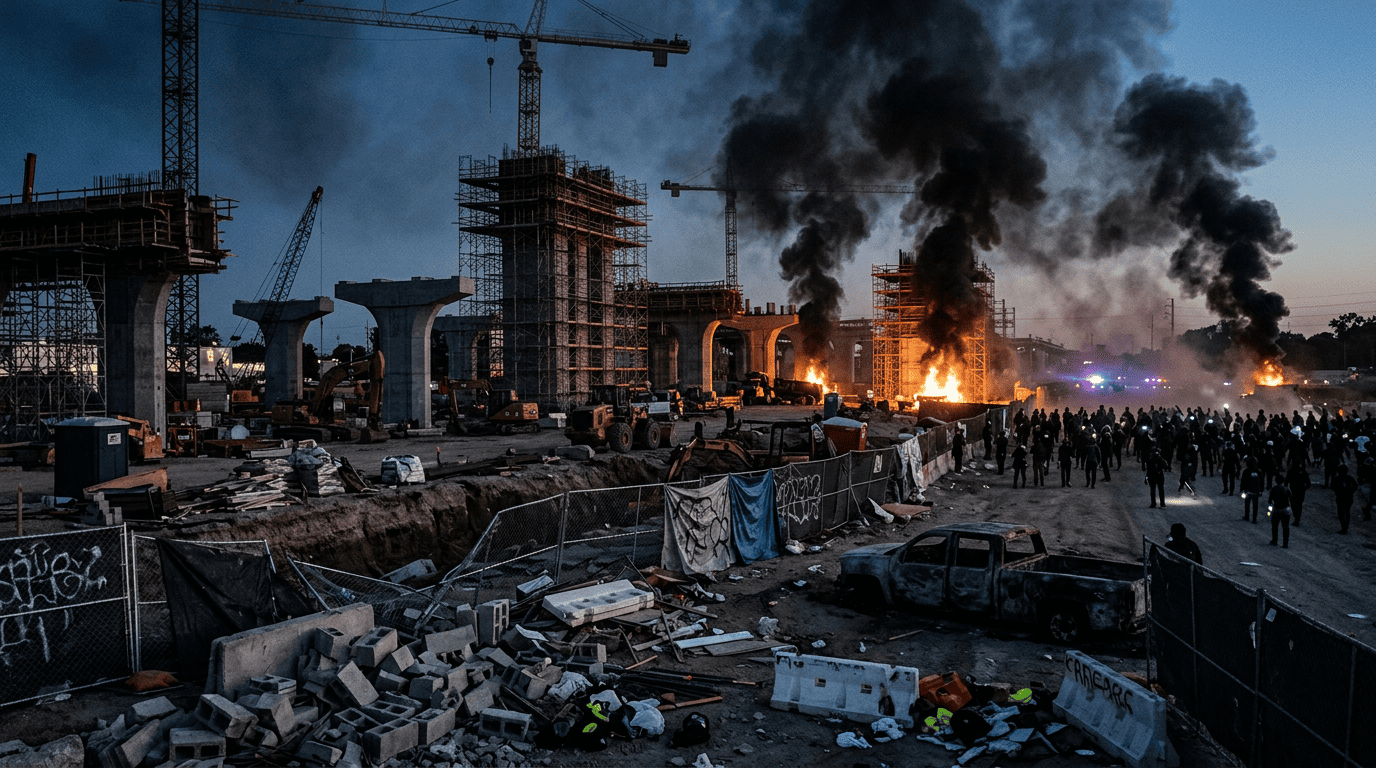
Cover for Riot, Strike Civil Commotion in Project Insurance Policies
Industry:
Infrastructure
Introduction:
In the context of Contractors All Risks Insurance/Erection All Risks Insurance policies, Strike Riot Civil Commotion (SRCC)/Riot Strike Malicious Damage (RSMD) cover is bought back via endorsements in the typical SRCC wordings Munich Re 001 form or offered as an inbuilt cover in the GIC Re type wordings more prevalent in India. Many Indian insurers have their Engineering treaties with foreign reinsurers who typically follow the Munich Re approach. There are pros and cons of both the approaches that will be discussed here, so that the Insured is enabled to take a conscious decision at the time of obtaining insurance cover for projects depending on the vulnerabilities of the project site environment.
What Each Clause is Trying to Do (in Car/ear Context)
Munich Re SRCC (MR 001) — event/actor-driven trigger:
The SRCC extension is framed around “disturbance of public peace” / strike/lockout dynamics and the acts of authorities responding to those disturbances. A representative MR 001 style wording covers loss/damage directly caused by:
persons taking part together with others in a disturbance of public peace,
actions of lawfully constituted authority in suppressing/minimizing such disturbance,
wilful acts of strikers/locked-out workers, and
actions of authorities preventing/minimizing such acts.
This extension is subject to a loss limit, usually INR 100,000,000.
General Insurance Corporation of India RSMD (GIC Re / India-market style):
The India-market RSMD construct is typically framed as “loss of or visible physical damage/destruction by external violent means”, then it explicitly excludes what is not intended to be picked up (notably: work stoppage/consequential loss, dispossession, and burglary/theft/larceny even if during public disturbance). The RSMD cover provided is by virtue of the base wordings and hence only limited by the policy Sum Insured.
Clean Comparison Matrix (Car/ear — Claims Outcome Drivers)
| Comparison point | MR 001 SRCC (Strike/Riot/Civil Commotion) | GIC-style RSMD (Riot/Strike/Malicious Damage) |
| Trigger logic | Event/actor-based: must fit “disturbance of public peace” (group action) or striker/lockout dynamics, plus authority actions. | Method-based: “external violent means” causing visible physical damage; does not inherently require a strike/riot context. |
| Lone-wolf vandalism / malicious mischief cover malicious mischief cover | Often not, unless it can be tied to SRCC-type disturbance/strike dynamics in the wording | Usually yes if it is external violent means and not theft/larceny driven |
| Authority action (police/army) damage while suppressing unrest | Explicitly included (authority suppressing/minimizing) | Not explicit - many markets handle it via proximate cause analysis |
| Pure work stoppage / slowdown / process interruption | Excluded (no cover for loss from cessation/retardation/interruption) | Excluded similarly (cessation/retardation/interruption) |
| Confiscation / requisition / commandeering | Excluded (dispossession by lawful authority) | Excluded similarly |
| Unlawful occupation / denial of access through occupation | Excluded (unlawful occupation / dispossession), with a common construct - “but physical damage before/during dispossession can still be covered” | Excluded similarly (unlawful occupation / prevention of access) |
| Theft/larceny/housebreaking during riot/commotion (“looting”) | Does not always spell out theft exclusion; whether missing property is paid will often turn on base CAR/EAR theft exclusions, “mysterious disappearance” exclusions, and how the policy defines “loss/damage.” | Explicitly excluded: Burglary/housebreaking/theft/larceny/attempts—even if during public disturbance from RSMD wordings but Theft and Burglary not excluded in CAR/EAR. |
| Boundary with War/Insurrection/Popular Rising | Excluded when civil commotion assumes proportions of popular rising; plus war/insurrection/rebellion etc excluded. | Separate political violence/war exclusions in CAR/EAR |
| Boundary with Terrorism | Excluded unless terrorism extension is purchased | Excluded unless terrorism extension is purchased |
| Aggregation / “one occurrence” hours clause | Often has an hours clause (commonly 168 hours) and aggregate limits | Inbuilt cover, No Loss Limit |
Car/ear-specific Claim Scenarios (With Likely Outcomes)
Labour strike: workers damage shuttering, scaffolding, and partially erected structure.
MR 001 SRCC: Payable - if damage is linked to striker/lockout acts or disturbance of public peace. RSMD: Payable as external violent means / malicious damage.
Local agitation: mob burns stored cables/consumables in laydown yard.
MR 001 SRCC: Payable as it is clearly a public-peace disturbance by persons acting together.
RSMD: Payable for physical damage by external violent means.
Night-time vandalism by unknown individuals (not linked to strike/riot): control panels smashed, wiring cut.
MR 001 SRCC: Often not payable if you cannot evidence “disturbance of public peace” / strike nexus (actor/occasion mismatch).
RSMD: Typically, payable (this is exactly where “MD” fills the gap).
“Looting” during unrest: copper cable reels missing after a riot; no visible damage to storage.
MR 001 SRCC: Grey area—depends heavily on base CAR/EAR theft exclusions and how “loss” is handled; many policies will not pay unexplained shortage.
RSMD: Not payable because theft/larceny/attempts are explicitly excluded during public disturbance.
Police action: to disperse crowd, authorities use force; project property is damaged.
MR 001 SRCC: Stronger footing because authority action to suppress/minimize disturbance is expressly covered.
RSMD: Wordings do not explicitly respond to “external violent means”.
Civil commotion escalates to “popular rising/insurrection” characteristics.MR 001 SRCC: Outright exclusion (civil commotion assuming proportion of popular rising; insurrection/rebellion etc).
RSMD: Excluded via political violence/war-type exclusions in the base wordings.
Conclusion:
Even if the market position is that RSMD is part of the base perils (and therefore not sub limited), the claims outcome depends on how the incident is characterized. If the proximate cause is clearly “riot/civil commotion,” insurers may still push the loss into the SRCC bucket (where MR001 sub limits apply). Therefore, for projects in riot/public disturbance prone areas, the Insureds should build an insurance program structure as:
- Base CAR/EAR for full project SI.
- SRCC Endorsement with an agreed SRCC limit that justifies the technical probable maximum loss (PML) for that area.
- Obtain a separate standalone political violence solution that covers SRCC/ sabotage/terrorism on higher limits, then dovetail it with CAR/EAR.
Disclaimer:
The proposed solution and approach contained herein are suggestive in nature and are intended solely to facilitate an understanding of possible insurance cover for riot, strike and civil commotion.
This note does not constitute an offer of insurance, underwriting commitment, or policy interpretation. The views expressed are based on general insurance principles and indicative market practices. The final insurance terms, scope of cover, and premium implications shall be subject to detailed underwriting assessment, risk engineering review, and acceptance by the concerned insurers and reinsurers in accordance with their internal guidelines and prevailing market conditions.
We, at Salasar, shall not be responsible or liable for any direct or consequential loss, damage, or claim arising out of reliance on this suggested approach. Stakeholders are advised to obtain specific legal, technical, and insurance advice before finalizing the insurance program to cover riot, strike, civil commotion, following physical damage.
Underwriting Case Study For Staged Commissioning Of Thermal Power Plant
 November 17, 2025
 SRE-TUW-01-PWR-NOV-25

Case Study on Abandonment of Insured Property after loss
December 13, 2025
SRE-TUW-02-IAR-MEGA-DEC-25

Inter-Site Movement, One Policy Solution - Case Study on Inland Transit Extension in Erection All Risks Insurance Policy
February 9, 2026
SRE-TUW-03-EAR-FEB-09
Heritage Facade Retention, One Structured Solution – Case Study on CAR & DSU Integration for a UNESCO Railway Redevelopment Project
February 20, 2026
SRE-TUW-04-EAR-DSU-FEB-20
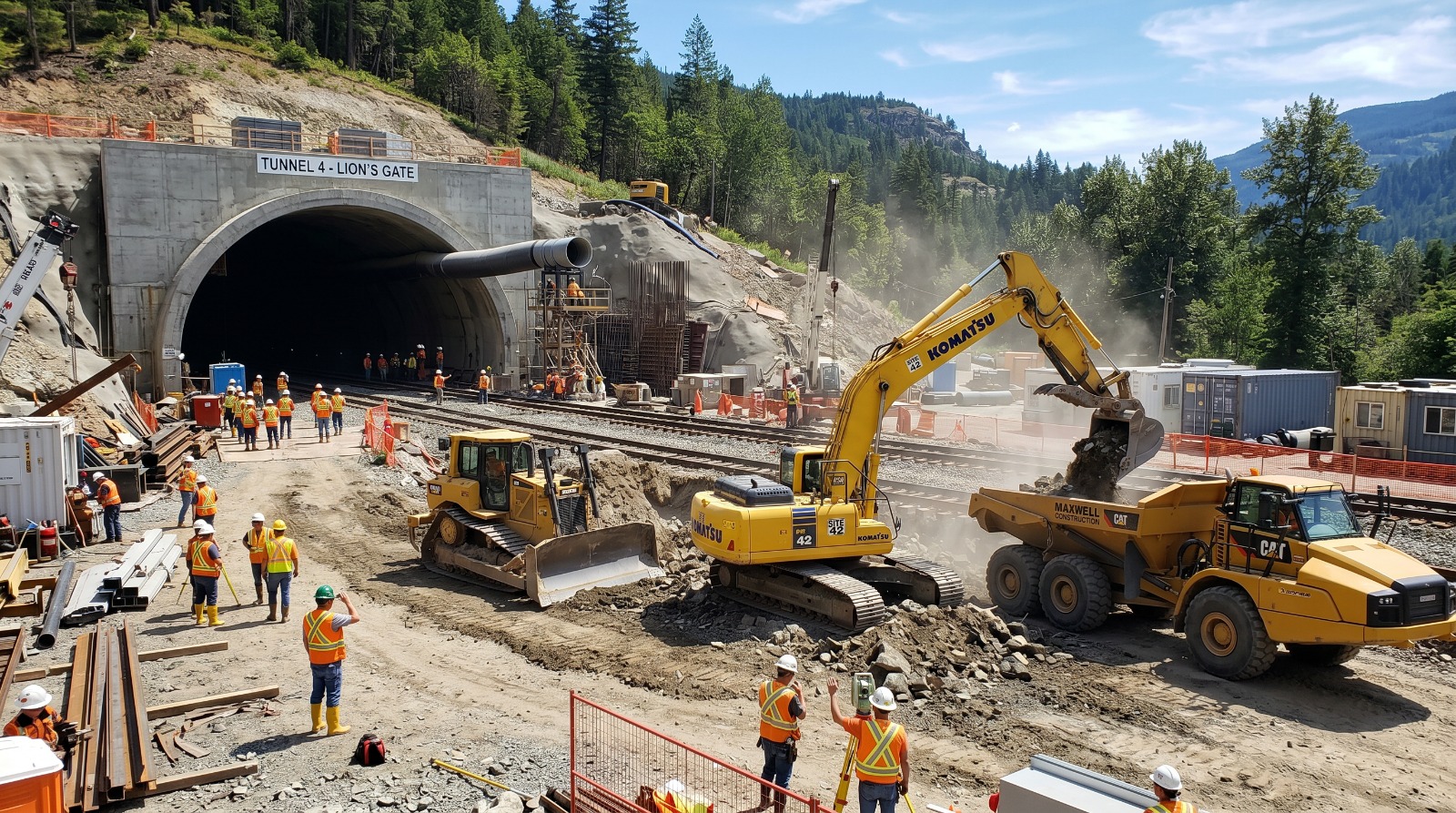
Underwriting Considerations of Contractor’s All Risk Policy for Tunnelling Project
June 25, 2026
SRE-TUW-06-RAIL-INFRA-JUNE-26
Significance of Return Period for Floods in Underwriting Construction Insurance
August 20, 2026
SRE-TUW-07-INFRA-CONSTRUCTION-AUG-26
 November 17, 2025
 SRE-TUW-01-PWR-NOV-25
Get a Structured Risk Strategy Tailored to Your Needs.