
 Iron & Steel
 Power
Power
 Plywood & Lamination
 Sugar
Sugar
 Tea
Tea
 Oil & Gas
 Solar & Wind
 Agriculture
 Chemical
 Food Product
 Real Estate & Construction
 Logistics
 Automobile

.jpg)





Significance of Return Period for Floods in Underwriting Construction Insurance
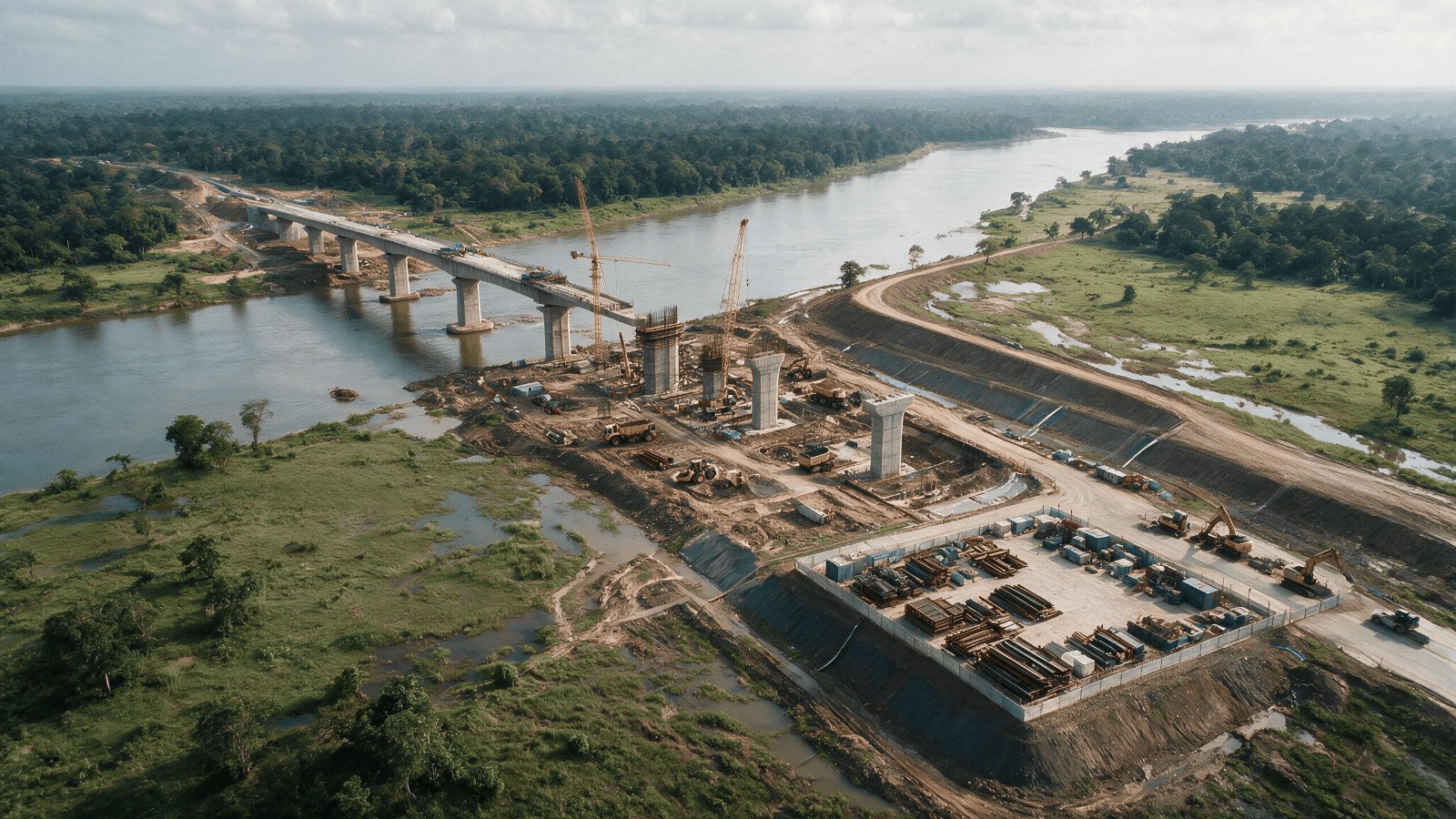
Return Period (RP) for floods is increasingly used in construction project insurance especially in policy conditions that govern how and where materials may be stored on-site. Understanding it is essential because it directly affects coverage, deductibles, claims defensibility, and compliance responsibility.
What is “Return Period” for Floods?
A Return Period (also called Recurrence Interval) represents the statistical probability of a flood of a certain magnitude occurring (or being exceeded) in any given year. Return Period (RP) for floods is a critical hydrological parameter used by underwriters to quantify flood hazard, calibrate risk appetite, impose underwriting conditions, and price the risk appropriately. A Return Period of X years means that a flood of a given magnitude has a 1/X probability of being equalled or exceeded in any one year (not that it occurs once every X years).
Examples:
| Return Period | Probability of occurring in any year |
|---|---|
| 10-year flood | 10% per year |
| 25-year flood | 4% per year |
| 50-year flood | 2% per year |
| 100-year flood | 1% per year |
So, a 100-year flood does NOT mean it happens once in 100 years — it means a 1% annual probability, and multiple such floods may occur within a decade.
Why insurers apply Return Period to storage conditions ?
Construction sites often store cement, sand, aggregates, fabricated steel, expensive machinery, electrical equipment, façade materials, precast elements etc. Construction projects are Temporary, often exposed (excavations, incomplete drainage, no permanent flood protection) and highly sensitive to water ingress and scouring. Therefore, flood risk is one of the dominant natural perils influencing underwriting decisions. Therefore, flood risk is one of the dominant natural perils influencing underwriting decisions.
Flood exposure varies by river basin proximity, drainage system, terrain, climate trend and monsoon behavior. Insurers seldom rely only on generic zoning. Instead, they use Return Period thresholds as risk benchmarks. It is used by underwriters to, assess severity and frequency of flood exposure, determine insurability, fix deductibles, sub-limits, and exclusions, impose risk management warranties and evaluate accumulation and catastrophe exposure.
So a policy may say:
- Storage of materials must be located above the highest flood level associated with a 25-year flood return period Or
- Flood losses to stored materials will be covered only if storage is located beyond the 50-year flood plain.
Typical Wording Examples
MR 107
Warranty concerning camps and stores
It is agreed and understood that otherwise subject to the terms, exclusions, provisions and conditions contained in the Policy or endorsed thereon, the Insurers shall only indemnify the Insured for loss, damage or liability directly or indirectly caused to camps and stores by fire, flood or inundation if these camps and stores are located above the highest water level recorded anywhere on the site during the last 20 years and the individual storage units are either at least 50 m apart or separated by fire walls. It is also agreed that the Insurers shall indemnify the Insured for any one occurrence only up to a limit of indemnity: INR 10 Crs AOA and INR 20 Crs in the aggregate of for camps, for each individual storage unit.
MR 109
Warranty concerning construction material
It is agreed and understood that otherwise subject to the terms, exclusions, provisions and conditions contained in the Policy or endorsed thereon, the Insurers shall only indemnify the Insured for loss, damage or liability directly or indirectly caused to construction material by flood or inundation if such construction material does not exceed three days’ demand and the exceeding quantities are kept in areas not endangered by 20-year floods.
MR 110
Special conditions concerning safety measures with respect to precipitation, flood and inundation:
It is agreed and understood that otherwise subject to the terms, exclusions, provisions and conditions contained in the Policy or endorsed thereon, the Insurers shall only indemnify the Insured for loss, damage or liability caused directly or indirectly by precipitation, flood or inundation if adequate safety measures have been taken in designing and executing the project involved. For the purposes of this Endorsement adequate safety measures shall mean that, at all times throughout the policy period, allowance is made for precipitation, flood and inundation up to a return period of 20 years for the location insured on the basis of the statistics prepared by the meteorological agencies. Loss, damage or liability resulting from the Insured’s not immediately removing obstructions (e.g. sand, trees) from watercourses within the construction site, whether carrying water or not, in order to maintain free water flow shall not be indemnifiable.
Return periods are determined by hydrological study / local authority mapping / insurer survey.
Examples of Implication of Return Periods:
A metro viaduct project near a riverbank:
100-year flood level = 48.5m.
Contractor storage yard is at 47.8m elevation.
Policy requires storage above 50m (100-year RP).
If flood waters rise to 48.5m and damage rebar and cement bags: Claim may be rejected
unless materials were stored above required RP threshold.
Implication 2 — Non-compliance may void cover:
If wording is condition precedent / warranty, even partial compliance failure may invalidate flood cover for stored material.
Implication 3 — Premiums & deductibles depend on RP exposure:
Higher risk zone = higher deductible or restricted cover or exclusion.
Implication 4 — Engineered protection becomes necessary: Contractors may need to:
- raise storage area levels
- construct bund walls
- install pumping systems
- build elevated racks
- use waterproof containers
Implication 5 — DSU Exposure Becomes Critical if key materials get damaged and delays occur.
Insurers applying RP thresholds aim to: avoid systemic flood-driven DSU losses.
Worked Examples
-
Example 1 — Highway Project in a Floodplain
Project sum insured: INR 1,000 crore
Materials stored value: INR 50 crore
Policy return-period condition: 25-year flood level compliance
Storage yard elevation:
Required minimum: 52.0m
Actual: 51.2m
A monsoon flood rises to 51.5m damaging: electrical panels, cement and steel girders.
Outcome:
Flood RP modelling indicates the flood corresponds to ~20-year RP. Storage NOT compliant.
Claim for INR 18 crore is: paid partially or denied depending on policy wording. The contractor bears significant loss. -
Example 2 — Contractor Builds Compliance Platform
Metro depot project
Policy condition: 50-year RP protection
✔ Contractor: raises storage pad by 1.5m
✔ uses sloped drainage
✔ stores E&M equipment in sealed containers
A flood event of 30-year RP occurs.
Result:
✔ Loss avoided
✔ No disputes
✔ Insured demonstrates risk management responsibility
This is exactly what insurers want. -
Example 3 — DSU Involvement
Wind farm project with DSU cover
Policy clause:
DSU cover applies only if critical components are stored outside 100-year RP flood area.
Nacelles stored in a low-lying yard. Flood destroys them and project delayed 6 months.
Outcome:
Material Damage = covered (possibly)
DSU = denied due to RP-based storage condition breach
This distinction is important.
Conclusion:
Return Period defines flood probability used by insurers to set storage safety levels. Storage must be placed above the RP flood level stated in the policy. Non-compliance can lead to denial or restriction of flood claims. Impact is especially critical where DSU cover exists. Risk engineering and documentation are essential.

Underwriting Case Study For Staged Commissioning Of Thermal Power Plant
 November 17, 2025
 SRE-TUW-01-PWR-NOV-25

Case Study on Abandonment of Insured Property after loss
December 13, 2025
SRE-TUW-02-IAR-MEGA-DEC-25

Inter-Site Movement, One Policy Solution - Case Study on Inland Transit Extension in Erection All Risks Insurance Policy
February 9, 2026
SRE-TUW-03-EAR-FEB-09

Heritage Facade Retention, One Structured Solution – Case Study on CAR & DSU Integration for a UNESCO Railway Redevelopment Project
February 20, 2026
SRE-TUW-04-EAR-DSU-FEB-20

Cover for Riot, Strike Civil Commotion in Project Insurance Policies
April 16, 2026
SRE-TUW-05-INFRA-APR-26
Underwriting Considerations of Contractor’s All Risk Policy for Tunnelling Project
June 25, 2026
SRE-TUW-06-RAIL-INFRA-JUNE-26
 November 17, 2025
 SRE-TUW-01-PWR-NOV-25
Get a Structured Risk Strategy Tailored to Your Needs.